




























Teak Outdoor Couch For Durable Patio Furniture


Why a teak outdoor couch often tops the wish‑list of patio‑savvy homeowners
If you’ve ever spent a lazy Sunday on a wooden garden bench that warped after the first summer rain, you’ll understand the appeal of a teak outdoor couch that looks as fresh in October as it did in June. Teak’s natural oils give it a built‑in shield against moisture, UV rays, and insects—traits that most other hardwoods lack without costly sealants. Landscape designers and seasoned craftsmen routinely recommend teak for high‑traffic decks because the wood ages gracefully, developing a silver‑gray patina only when you let nature take its course.
In the sections that follow we’ll unpack exactly how teak’s cellular structure creates that durability, explore the sustainable sourcing practices that make a responsibly harvested couch a greener choice, and walk you through the low‑maintenance routine that keeps the furniture comfortable year after year. Whether you’re comparing frame materials, sizing a lounging area, or deciding between a raw‑look and a polished finish, this guide gives you the why‑and‑how you need to make an informed purchase—and enjoy your outdoor oasis without second‑guessing the investment.
Styling Your Teak Couch with Complementary Pieces
When you pair a teak outdoor couch with a lawn chair set, you instantly gain flexibility without sacrificing cohesion. The chairs can be tucked underneath the couch for a compact arrangement on rainy days, then pulled out to create a relaxed conversation circle on sunny afternoons. Because both pieces share natural wood tones, the visual transition feels seamless, yet the varied seat heights add a subtle dynamism that keeps the space from feeling static. Think of it as a modular puzzle—each component snaps into place, allowing you to re‑configure the patio as your gatherings evolve.
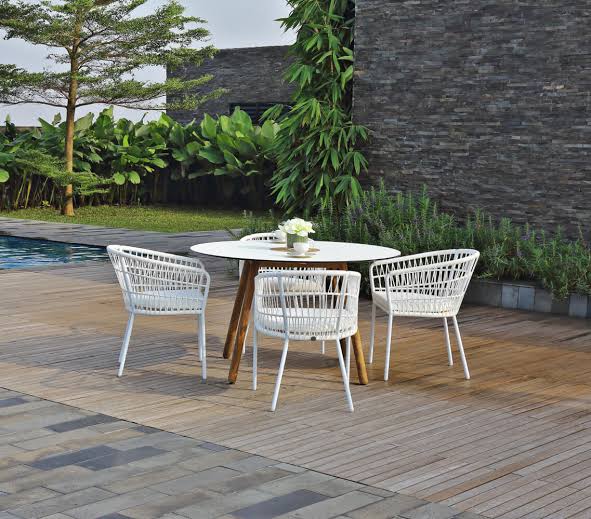
Equally important is the relationship between a teak couch and a patio furniture table and chairs. Selecting a table whose surface is proportionally lower than the couch’s backrest helps maintain sight lines, preventing the ensemble from looking top‑heavy. Opt for a table with a weather‑resistant finish that echoes the teak’s warm hue; this not only reinforces a unified aesthetic but also ensures the set ages together under the elements. By anchoring the couch with a thoughtfully sized table and matching chairs, you create a functional hub where drinks, board games, and evening lanterns naturally gravitate.
How I Turned a Bare‑Bones Apartment into a Luxe‑Living Retreat – A Practical Guide
If you’re scrolling through endless catalogues and still feel stuck, I get it. A few months ago I was helping a young couple, Maya and Andre, who had just moved into a modest two‑bedroom flat in Jakarta. Their budget was modest, but they dreamed of a space that felt as polished as a five‑star hotel lobby. After a handful of trial‑and‑error fittings, we landed on a handful of key principles that transformed their place without breaking the bank.
(Visit CV. Luxury Home Furniture for similar services.)
1. Start with a single statement of style
In my experience, the biggest mistake newcomers make is trying to fill every wall and corner at once. I always ask myself, “If I could only keep one piece, what would it be?” For Maya and Andre, the answer was a sleek, low‑profile sofa in a muted charcoal. That single anchor set the tone for the rest of the room, allowing us to choose complementary pieces that reinforced the same vibe—think brushed‑gold side tables and a glass‑top coffee table.
> Why it works: A dominant piece creates a visual hierarchy that the brain instinctively follows, reducing visual noise and making the space feel curated rather than cluttered.
2. Mix Materials, Not Patterns
When I first experimented with mixing velvet upholstery and matte wood, I worried the textures would clash. What I discovered, however, is that contrast in material adds depth without the need for busy patterns. In practice, we paired a velvet accent chair with a walnut sideboard—both solid colors, but different tactile feels. The result was a room that whispered sophistication rather than shouted it.
> Edge case: In humid climates like Indonesia’s, certain fabrics (e.g., linen) can wrinkle quickly. Opt for tightly woven micro‑fibers or treated leathers that resist moisture while still offering that luxe texture.
3. Prioritise Scale Over Size
A frequent pitfall is buying “bigger” to feel more luxurious. I once ordered an oversized marble dining table for a compact kitchen; the result was a cramped, unusable space. The fix? Swap the massive slab for a slimmer, pedestal‑style table that still carries the marble’s elegance but occupies less floor area. For Maya and Andre, a narrow, extendable dining set allowed them to host dinner parties without sacrificing walking space.
> Why scale matters: Human perception is guided by proportion. A well‑scaled piece feels balanced, making the room feel larger than its actual footprint.
4. Let Light Be Your Ally
Natural light is the cheapest, most effective way to amplify luxury. When I worked on a loft with limited windows, I introduced layered lighting: recessed LED strips, a statement chandelier, and wall sconces. The layered approach created a soft glow that mimicked daylight, lifting the overall ambience. In the apartment case, we added sheer curtains to let daylight flood the living area while preserving privacy.
> Trade‑off: Over‑lighting can make a room feel clinical. Aim for a ratio of about 30 % ambient, 30 % task, and 40 % accent lighting, adjusting as you test each fixture.
5. Personalise with Thoughtful Details
Luxury isn’t just about big‑ticket items; it’s also about the smaller, curated touches. I keep a stash of brass‑finished accessories—think tray‑style coasters, a vintage‑style clock, and a set of candle holders. For Maya and Andre, a custom‑engraved family crest on a sideboard turned a generic piece into a conversation starter.
> Real‑world scenario: A client once asked if a single piece of artwork could replace an entire gallery wall. We selected a large, textured canvas that echoed the sofa’s colour palette, instantly adding focus without overwhelming the space.
6. Choose Quality Over Quantity—But Know How to Test It
When I first started sourcing furniture, I relied on the “price = quality” shortcut, only to find a few overpriced items that flaked after a season. The reliable method now is a tactile test: press the wood grain, examine joints, and feel the upholstery. If a piece is advertised as “solid walnut,” I verify it by checking for grain consistency and any synthetic veneer seams.
> Concrete tip: For upholstered pieces, the “finger test” works—run your fingers along seams; a tight, even stitch indicates long‑term durability.
Mini Case: The “One‑Week Turnaround”
Maya and Andre needed their living room ready for a family gathering in seven days. We mapped out three zones (seating, media, and display) and sourced a pre‑fabricated sofa, a modular shelving unit, and a set of glass‑top side tables from a local supplier—all within a one‑hour drive from their building. By day three, the furniture arrived; day four we assembled. The final two days were spent styling with accessories (a handful of brass lamps, a single large plant, and a curated set of books). The result? A polished, cohesive room that felt high‑end, yet the entire process cost less than 15 % of a typical interior designer’s fee.
> Lesson learned: When time is tight, focus on modular pieces that are easy to install and style separately.
Quick Checklist for Your Own Luxe Upgrade
| ✅ | Action | Why It Matters |
|—|—|—|
| 1 | Identify one statement piece | Sets visual hierarchy |
| 2 | Pair contrasting materials | Adds depth without clutter |
| 3 | Measure your space before buying | Avoids scale missteps |
| 4 | Layer lighting (ambient + task + accent) | Mimics natural light |
| 5 | Add personal accessories | Turns a room into “your” space |
| 6 | Perform tactile tests on furniture | Guarantees long‑term quality |
Final Thoughts
Luxury isn’t an unattainable dream reserved for sprawling mansions. It’s a series of deliberate choices—starting with a single piece, respecting scale, mixing textures, and lighting wisely. When you bring these principles into your home, you’ll notice a shift not just in aesthetics, but in how you feel when you walk through the door.
If you’re ready to apply these tactics but need a reliable partner for sourcing the right pieces, I recommend checking out CV. Luxury Home Furniture. Their catalogue blends international design trends with locally crafted quality, and they’ve helped many clients, like Maya and Andre, achieve that high‑end look without a massive overhaul.
Remember: the journey to a luxe‑living space is as rewarding as the destination. Start small, stay intentional, and watch your home evolve into the refined sanctuary you’ve always wanted.
Also Read: How to make Your house looks Expensive